
August 04, 2026
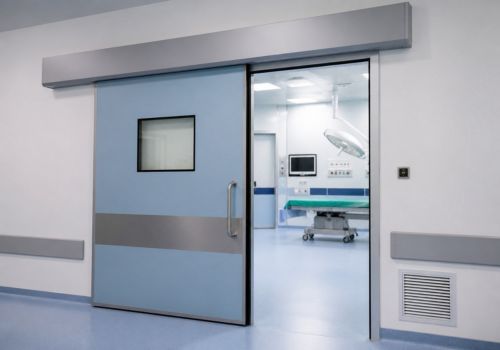
Hospitals need more than strong doors. They need doors that support hygiene, infection control, patient safety, privacy, and smooth movement. This is especially important in operating theatres, ICUs, laboratories, isolation rooms, and cleanrooms where even small gaps can affect the environment.
This is where Hermetic Doors UAE solutions become important. Designed to close tightly and create a controlled seal, hermetic doors help healthcare facilities manage airflow, dust, contaminants, noise, and temperature.
In Dubai and across the UAE, hospitals, clinics, laboratories, pharmaceutical companies, and other medical facilities are increasingly looking for high-performance door systems that meet the demands of modern healthcare buildings. But where are hermetic doors actually used, and why do hospitals prefer them over ordinary automatic doors?
Let us understand how they work, where they are needed, and what to consider before installation.
Hermetic doors are specially designed doors that create a tight seal when they close. Unlike a standard door, the door leaf and sealing system are designed to reduce air leakage around the opening.
They are commonly used in areas where air pressure, hygiene, cleanliness, and infection control are important.
In healthcare facilities, hermetic hospital doors are often installed in:
These doors can be manual or automatic. However, automatic hermetic doors are often preferred in busy healthcare environments because they allow hands-free operation and reduce unnecessary contact.
The main difference between a normal sliding door and a hermetic door is its closing action.
A hermetic door does not simply move into the closed position. Its mechanism is designed to press the door against its seals and create a controlled, tight closure.
A typical system may include:
When the door closes, the sealing system helps reduce unwanted air movement through the opening.
This makes hermetic doors suitable for environments where maintaining a controlled internal atmosphere is important.
Hospitals have very different door requirements from offices, shops, or residential buildings. A hospital door must support daily traffic while also helping maintain a clean and controlled environment.
Here are the major reasons hospitals choose hospital hermetic doors UAE solutions.
Infection control is one of the biggest reasons for using hermetic doors.
A properly designed door with suitable seals can help reduce the movement of airborne particles between controlled areas.
This can be particularly useful in operating theatres, isolation rooms, laboratories, and sterile environments.
The door itself is not a replacement for hospital infection control procedures. However, it can become an important part of the overall room design.
The sealing system is a key feature of an airtight hospital door.
When the door closes properly, its seals help limit unwanted air leakage. This can support areas that need controlled pressure differences.
For example, a hospital may need one room to remain at positive pressure while another area may require negative pressure. The correct door system can help the room maintain its designed conditions.
Healthcare doors are exposed to frequent cleaning.
Hygienic hospital doors are generally designed with smooth surfaces and fewer areas where dirt can collect. Depending on the specification, materials and finishes can be selected to withstand regular cleaning and disinfecting.
This is important because hospital doors may be touched or operated many times every day.
Healthcare workers often move patients, equipment, medicines, or instruments through doorways.
With automatic operation, staff can open the door without touching a handle.
This is one reason healthcare automatic doors are useful in hospitals with high traffic.
Imagine a nurse moving a patient from an ICU to another treatment area. Stopping to open a heavy door can slow the process.
Automatic sliding systems allow the doorway to operate smoothly while staff focus on patient care.
Some hermetic door systems can also provide better acoustic performance than basic doors.
This can be useful in patient rooms, operating areas, consultation rooms, and other spaces where noise control matters.
The demand for high performance doors is closely linked with the UAE’s growing healthcare, pharmaceutical, laboratory, and commercial sectors.
Here are some common applications.
| Area | Why Hermetic Doors Are Used |
| Operating theatres | Hygiene, controlled airflow and easy movement |
| ICUs | Infection control and controlled environments |
| Isolation rooms | Helps support pressure control |
| Laboratories | Limits unwanted air movement |
| Cleanrooms | Supports controlled clean environments |
| Pharmaceutical facilities | Helps maintain controlled production areas |
| Recovery rooms | Hygiene, privacy and smooth operation |
| Diagnostic areas | Cleanliness and controlled access |
| Sterile rooms | Supports contamination control |
| Medical storage | Clean and controlled access |
Operating theatres require a highly controlled environment.
During surgery, hospitals need to manage people movement, cleanliness, temperature, pressure, and airborne contamination.
Operating room doors are therefore not ordinary entrance doors.
A suitable hermetic system can help:
OT doors UAE projects may use sliding hermetic systems where space, hygiene, and controlled airflow are important.
For a new hospital project in Dubai, architects and contractors should consider the door system during the early design stage rather than treating it as a final finishing item.
ICUs are busy areas where patients may require critical care.
The door system should allow medical teams to move quickly while maintaining the required environmental conditions.
ICU hermetic doors can be useful where controlled airflow, hygiene, privacy, and easy access are priorities.
Automatic opening can also reduce the need for healthcare workers to touch handles while moving patients or equipment.
The exact door specification should always match the ICU layout, room pressure requirements, traffic level, and hospital design standards.
Yes.
Laboratories and cleanrooms often need controlled environments with limited contamination.
Cleanroom doors UAE projects may use hermetic sliding systems because the door can provide a controlled seal and smooth operation.
In pharmaceutical manufacturing, the requirements can be even more demanding.
Pharmaceutical cleanroom doors may need to work with:
The door should therefore be selected as part of the complete cleanroom design.
Both systems can provide automatic movement, but they are designed for different needs.
| Feature | Hermetic Door | Standard Automatic Sliding Door |
| Airtight sealing | High | Usually limited |
| Pressure control support | Suitable for controlled areas | Limited |
| Infection control use | Excellent for specific areas | General use |
| Cleanroom application | Suitable with correct specification | Usually not the first choice |
| Automatic operation | Available | Available |
| High traffic use | Yes | Yes |
| Hospital application | Specialist areas | General areas |
| Sealing system | Designed for tight closure | Basic closure |
| Cost | Generally higher | Generally lower |
A standard automatic door may be perfectly suitable for a hospital reception, corridor, or general entrance.
However, a controlled operating room or cleanroom needs a more specialised system.
Choosing a door based only on appearance or price can create problems later.
A good hospital door systems specification should consider the complete operating environment.
Tight sealing:
The door should provide the level of sealing required for the room.
Automatic operation:
Useful for high traffic and hands free movement.
Smooth movement:
The door should open and close without unnecessary vibration or noise.
Durable construction:
Healthcare doors may operate hundreds of times during a busy day.
Easy cleaning:
Smooth and hygienic surfaces are important.
Safety sensors:
Sensors should help prevent the door from closing when a person or object is in the doorway.
Emergency operation:
The system should have suitable emergency opening provisions based on the application.
Integration:
The door may need to work with access control, fire alarm systems, building management systems, or room interlocks.
Before ordering, healthcare project teams can use the following checklist.
| Specification | What to Check |
| Door type | Single or double sliding |
| Operation | Manual or automatic |
| Door size | Match opening and equipment movement |
| Sealing | Required level of airtightness |
| Surface | Smooth and easy to clean |
| Frame | Suitable for healthcare environment |
| Sensors | Safety and activation requirements |
| Access control | Required or not |
| Interlock | Needed for cleanroom or controlled areas |
| Emergency function | Confirm project requirements |
| Finish | Suitable for frequent cleaning |
| Maintenance | Spare parts and service availability |
Installation quality can affect the performance of even a high quality door.
Before hermetic door installation UAE, the project team should check the following:
The opening must have the correct dimensions and structural support.
The required pressure difference should be understood before finalising the door system.
The door cannot be considered separately from the HVAC system. Air pressure and airflow design can directly affect how the door performs.
Automatic doors require suitable power and control connections.
Hospitals may need restricted access in operating areas, laboratories, pharmaceutical zones, and staff only spaces.
The track, door movement, and surrounding finishes must be coordinated with the architectural design.
There is no single price for Hermetic Doors UAE because the final cost depends on the project specification.
Factors that can affect the price include:
A hospital should not select the cheapest door without checking its technical suitability.
A low initial price can become expensive if the door has frequent breakdowns, poor sealing, limited spare parts, or difficult maintenance.
Regular maintenance helps keep the system safe and reliable.
Healthcare facilities should also follow the maintenance schedule recommended for the specific door system.
The cheapest option may not provide the required sealing, durability, or service support.
The door should match the pressure requirements of the room.
A general automatic sliding door is not automatically a substitute for a hermetic system.
Hospitals operate continuously. Service availability matters.
If the door is planned too late, wall openings, electrical connections, HVAC systems, and access control may not match.
Ask whether important replacement components are readily available in the UAE.
When comparing suppliers, look beyond the product brochure.
Ask these questions:
A supplier with experience in healthcare projects can help avoid costly mistakes during design and installation.
Hermetic doors are not limited to large hospitals.
They can also be considered for:
The right application depends on the required level of hygiene, pressure control, traffic, and access.
A hermetic door is used in areas where tight sealing, hygiene, controlled airflow, and easy movement are important. Common applications include operating theatres, ICUs, isolation rooms, laboratories, and cleanrooms.
Hermetic doors are designed to provide a much tighter seal than standard doors. However, the exact level of airtightness depends on the door design, seals, installation, wall construction, and project requirements.
Operating theatres require controlled environmental conditions. Hermetic doors help reduce unwanted air movement while allowing medical teams to move patients and equipment efficiently.
For many busy healthcare areas, automatic operation can improve workflow and reduce touch points. However, the best choice depends on the room, traffic, safety requirements, and hospital design.
Yes. Hermetic systems can be suitable for cleanrooms when they are correctly specified for the required cleanliness level, pressure conditions, cleaning process, and operational requirements.
Yes. They are commonly considered for controlled pharmaceutical production areas, laboratories, material transfer areas, and other environments where contamination and airflow need to be managed.
The major difference is sealing. Standard automatic sliding doors are mainly designed for convenient movement, while hermetic systems are designed with specialised closing and sealing features for controlled environments.
The maintenance frequency depends on usage and the door system. High-traffic hospital doors should be inspected regularly, with seals, sensors, tracks, operators, and safety functions checked as part of a planned maintenance programme.
Check the door size, sealing requirements, room pressure, automatic operation, safety sensors, surface finish, access control, installation requirements, spare parts, warranty, and after-sales service.
Healthcare projects can work with specialist automatic door companies that understand hospital and cleanroom requirements. Deto Automatic Doors LLC can assist businesses looking for suitable automatic and specialised door solutions for healthcare environments in Dubai and the UAE.
The right door can make a major difference in a healthcare environment. It can support hygiene, improve workflow, reduce unnecessary contact, and help maintain controlled room conditions.
From operating theatres and ICUs to laboratories, cleanrooms, pharmaceutical facilities, and private clinics, Hermetic Doors UAE solutions should be selected according to the actual needs of the facility.
If you are planning a new hospital, renovating an existing clinic, or developing a laboratory or pharmaceutical facility, work with a specialist who can understand your technical requirements before recommending a door.
Deto Automatic Doors LLC provides professional support for healthcare and commercial projects in Dubai and across the UAE. Whether you need custom Hermetic Doors UAE, medical sliding doors, installation, maintenance, or ongoing technical support, the team can help you select a solution suited to your facility.
Contact us for expert consultation, custom door solutions, professional hermetic door installation UAE, maintenance, and support for hospitals, clinics, laboratories, cleanrooms, and other healthcare facilities.